Author: tnbrtnbrprpr
Earlier, I described a day of kayak fishing. This time I will explain how I fish from a pedal kayak, the benefits I found in switching from paddling to pedaling, and the particular appeal of Cirrus.
Tai Rubber Fishing
A mainstay of vertical fishing alongside jigging. A weighted head and skirt imitate a living creature, with the skirt's vibrations stimulating feeding instincts. Its name comes from tai kabura lures developed for sea bream, but it catches many species.
Its first attraction is how simply it catches fish: essentially, just retrieve. Drop to the bottom, wind up about 15m, and repeat. Yet retrieve and sink speeds, head shapes and colors, and skirt combinations provide endless strategy. TV anglers carry astonishing collections and some change heads every drop. That is part of the fun, but as a budget-conscious angler on an allowance, I seek big fish for the lowest cost with minimal changes. As before, I cannot say my approach is right or wrong; I am sharing how I think and catch fish with tai rubber.
Your first decision is whether to buy a ready-made head-and-skirt lure or combine separate parts. As with jigging, ready-made products are a reliable starting point. So what should you prepare?
Head Color
Orange/gold, red, red/gold and green/gold are commonly recommended—or at least commonly seen. Chartreuse options exist now, but start with those basics. Binbin Switch also has realistic squid colors, though my impression is that they catch less. In both jigging and tai rubber, colors that make people wonder whether they could catch anything often work best. Colors that catch anglers and colors that catch fish seem quite different.
Head Shape
I have tried various shapes; again, use what you trust. If considering one detail, think about how the shape meets the current. Tapering toward the skirt reduces current influence on the drop and makes bottom contact easier to detect. Tapering toward the main line reduces retrieve resistance. Some heads can be reversed to suit conditions, which is useful.
Then comes lead versus tungsten. I doubt paying twice as much for tungsten doubles the catch. Recently I kept colors and skirts unchanged but switched to tungsten heads, and honestly felt I caught more on lead. Since becoming particular about tai rubber, my red sea bream catches have collapsed. I caught plenty when using ready-made lures without overthinking. I seem to have wandered into a slump.
Rubber Strands & Skirts
Skirts, like heads, come in many varieties with detailed labels for clear or murky water. Choose what you believe suits your fishing grounds. For a basic selection, the clear-water and murky-water versions above should cover almost all conditions, in my view.
Next consider skirt flashiness. A bold skirt sends stronger vibrations and attracts more attention, which sounds good, but tai rubber was developed for wary red sea bream. Stronger attraction is not always better—often the reverse. Surprisingly, a subtle presentation that barely makes its presence known can catch more. Perhaps red heads lose their color at depth so fish see only the silhouette. I therefore choose the plainest skirt possible except in very murky water.
A Tai Rubber Trick
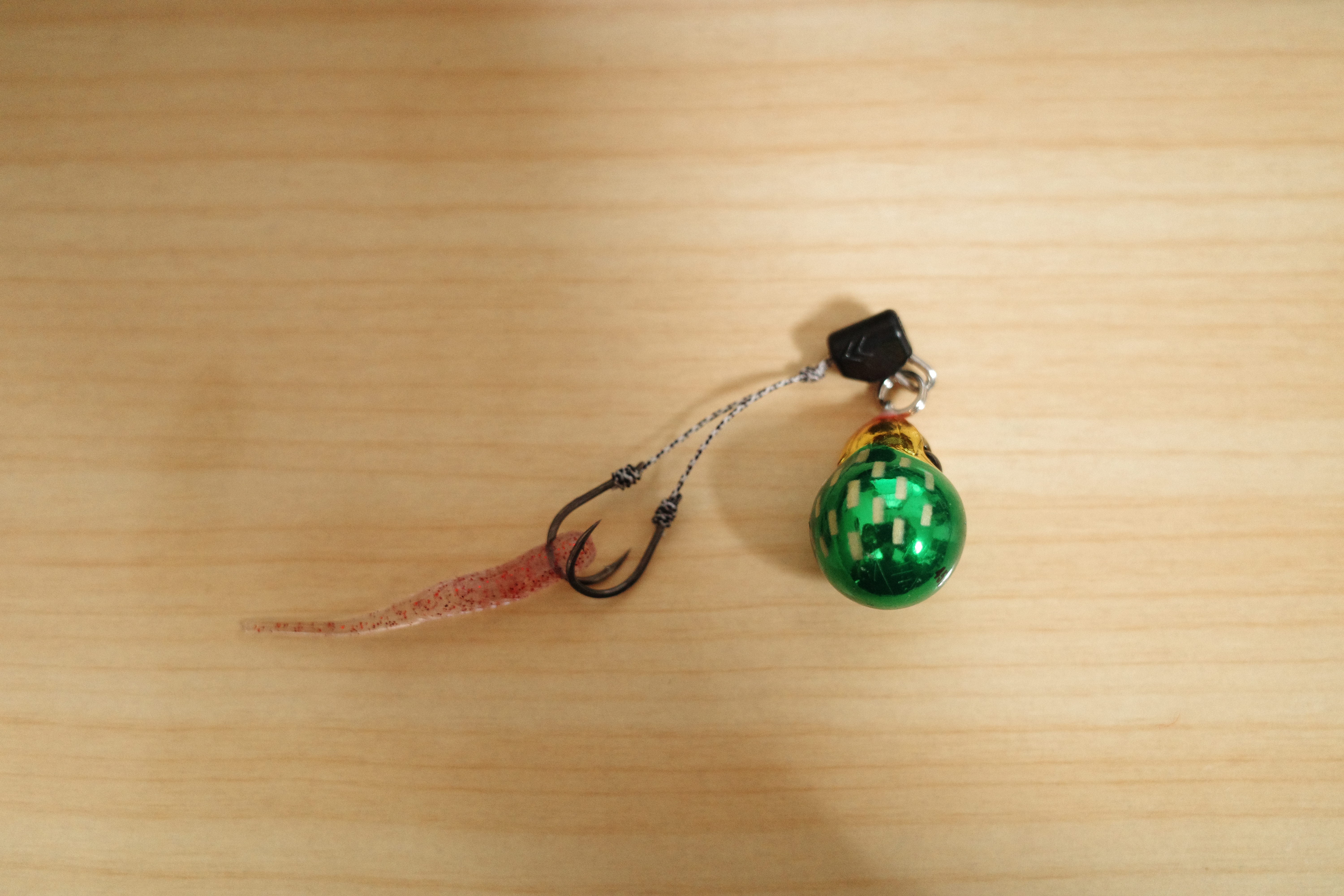
At the extreme, you can omit the skirt and lightly nose-hook a soft plastic for horse mackerel instead. It catches remarkably well. My results improved using this on Binbin Switch Candy, and friends have caught sea bream with it on ordinary Binbin Switch and other tai rubber too. Pufferfish can strip a normal skirt in one drop, leaving only hooks; this method minimizes damage. If conventional methods frustrate you, give it a try.
Another tip is to use the smallest hooks practical. Oversized hooks are also thicker and can tear the mouth, and may feel unnatural to attacking fish. Smaller hooks reduce that unnatural feel and bury deeply into the mouth, helping reduce losses during the fight. I recommend them.
Cirrus and Tai Rubber
Cirrus suits tai rubber very well. When you want a vertical drop, use the drive to compensate for wind or fast current and keep the lure directly below. Conversely, pedaling a little while it sinks creates an angled drift presentation. You can handle the kayak to match the day's current while fishing without frustration.
After all that, some say head shape and color do not matter at all. Successful colors and skirts probably change daily, with no true single answer. Perhaps what matters in the end is fishing a rig you trust. Anyone who enjoys that uncertainty should try tai rubber.
Slow Jigging
This technique rose rapidly over roughly the past decade and now stands alongside jigging and tai rubber. Heavy 200–300g jigs provide outstanding lure appeal and the dream of large fish. I am still studying it, but its results and fish size make it one I strongly recommend.
Its defining feature is the very large, heavy jig. I use 300g even in 15m of water—and yes, it catches. One lure can cover roughly 15–300m. As the name suggests, it slowly works a narrow depth band while appealing over a broad area. Big fish caught this way often never appear on the fish finder; perhaps the lure draws them from farther away.
The method is simple. After touching bottom, lift the rod and wind a quarter to one reel turn. Lower the tip almost to the surface, then lift again when you feel the jig's weight. Repeat. Suddenly the line may go slack and the jig stop falling—that is the thrilling moment. Quickly recover slack and set the hook. Once the rod loads up, enjoy the powerful first run and deeply bent rod of a large fish.
Choosing Slow Jigs
As in regular jigging, choose shapes and colors you trust. Flat jigs flutter like leaves; slender ones dart sideways on the lift and spin as they fall. Learn each lure's action and choose one that looks irresistibly tempting. People say flat jigs suit bottom fish, slender ones pelagics and full glow giants, but trust your own choice.
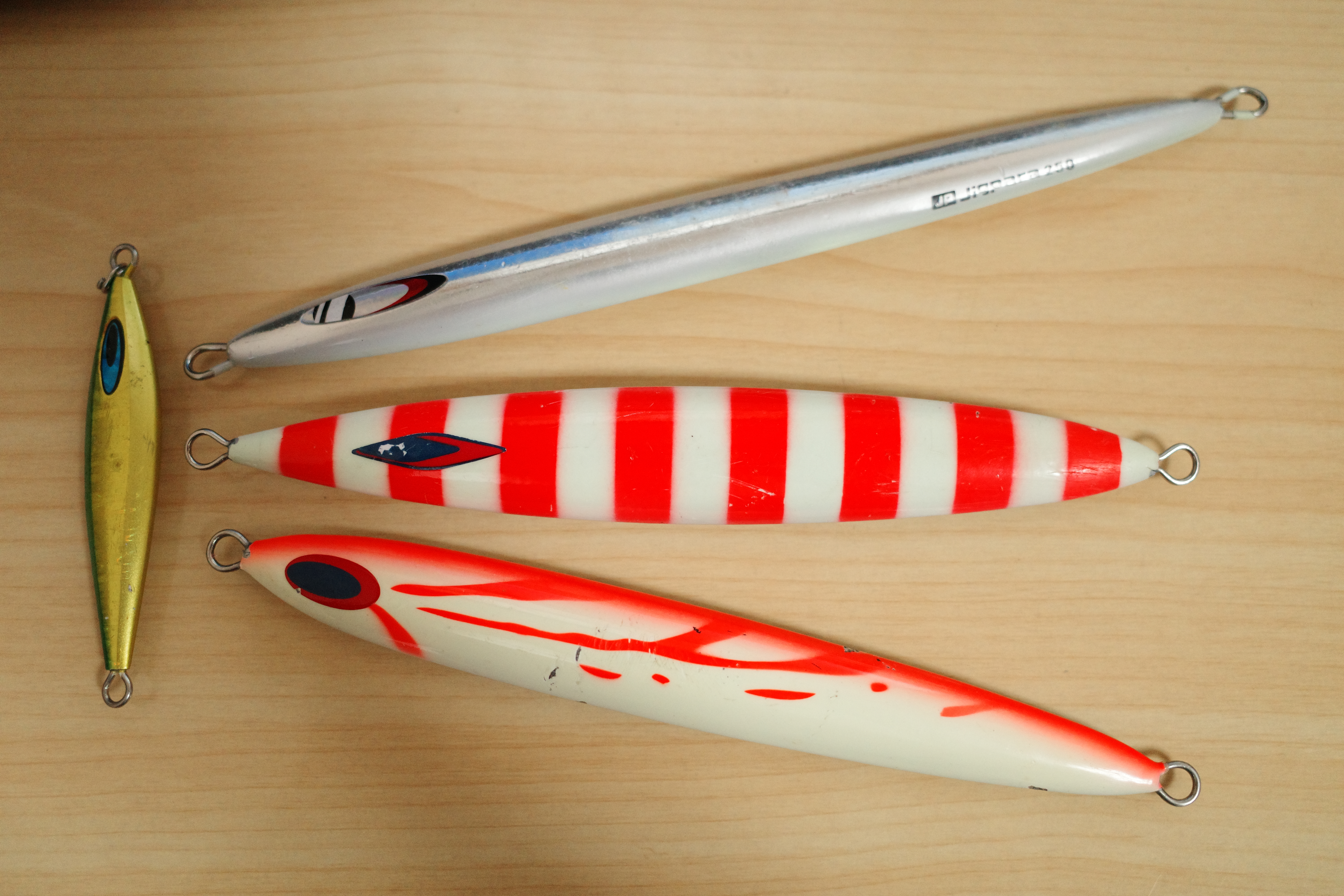
Here I want to focus on material. Unlike regular jigging, slow jigging induces bites with a leisurely fall. I recommend aluminum. These jigs are extremely heavy yet must fall slowly—a seeming contradiction. Aluminum, at about 0.13 times tungsten's density, nearly ten times lighter, shines here. Material and distinctive shape allow a fast descent from weight but a very slow fall during presentation. Iron jigs offer a similar low-density fall, but I personally hesitate to recommend them because they rust when paint chips.
My first-choice slow jigs are Jigpara Vertical and DeepLiner CXWL and SPY-V. Mainly silver and Magma Glow, with orange zebra glow as a variation. Jigpara offers incredible value: this performance for under ¥1,000 deserves respect. DeepLiner delivers catches worthy of its price. On first use, its falling action made me exclaim. I think its glow brightness and duration are among the best. Winter Magma Glow is especially productive for amberjack, young yellowtail and tuna.
Slow Jigging Tips & Precautions
Easy catches still require choosing the right spot. As mentioned earlier, the sea has concentrated areas and empty ones. Even a lure that attracts distant fish must be visible to them. Look carefully for tide lines, offshore slopes, drop-offs and reefs, and change locations fairly often to search broadly and thoroughly. I do five sets of 30 lifts, moving if there is no response. Surprisingly, bites often come around lift 25.
Slow jigging is more tiring than light jigging. Although movements are slow, the heavy lure leaves your arms exhausted. It is a kind of training. Alternate with regular jigging or tai rubber, or take breaks, rather than trying to continue without rest.
Finally, perhaps it is my skill, but summer catches fell visibly in the same waters. I wonder whether abundant bait makes predators selective or they are not fully grown yet. Whatever the reason, I cannot catch them. Lure color, pattern and size may need seasonal changes.
Cirrus and Slow Jigging
In one word: superb.
Cirrus's high seat allows a greater rod stroke than paddle kayaks, an advantage for the large jig movements this technique requires. Its stability even allows standing to fish (this does not guarantee safety and is not recommended; conditions and the angler's build matter). It feels like slow jigging from your own charter boat. Have you had slack line wrap around the rod tip while seated? Standing frees you from that frustration.
That covers slow jigging, though I am still learning. I hope to keep sharing its appeal through videos.
Live Bait & Chum Basket Fishing
Kayak fishing is not limited to lures; bait fishing is possible too. It usually needs more gear and clutters the deck, but Cirrus handles it well. There is ample bait space and few protrusions to snag rigs. This versatility is one reason I recommend Cirrus as an ambassador. To conclude, I will share the bait methods I have tried and their pros and cons.
Live Bait Fishing
Hook a live fish and let it swim to tempt a predator. To me it is the cruelest yet most exciting bait fishing. After reaching bottom, wind up about 1m and wait. The bait starts struggling; contain your excitement and wait longer. When the tip is pulled underwater, let the fish load the rod and set the hook. That moment is irresistible.
Very High Catch Chances—and Big Fish
That is the power of a live fish as bait. It feels like entering a bonus round. It still produces in midwinter when overall catches decline. If you are returning to kayak fishing after 2 months and determined to catch something, why not try?
You Can Leave a Rod Set
With a rod holder, you can fish live bait to starboard and another method to port. What a luxury! The hope gives wonderful peace of mind. A double hookup, however, becomes a crisis: rigs may tangle under the kayak and chasing two fish can leave you with neither. Luxury has its complications.
Risk of Greater Disappointment
Live bait is consumed, and you cannot repeatedly raise and lower the same fish. You hesitate to move because that could waste a bait, restricting mobility. Even though big fish are likely, small fish and unwanted lizardfish can take them. Losing one of ten purchased baits to a lizardfish is disheartening. Lure fishing can end with zero losses; live bait inevitably dwindles. Remember that high expectations can mean greater disappointment.
I use Ginpei baitfish: easy to buy at tackle shops and hardy, though not to be handled carelessly. At around ¥150 each, they are hardly cheap. Horse mackerel is also common, but I consider Ginpei sufficient.
I hear goldfish are another trick. I have not tried them.
Chum Basket Fishing
Attach a tenbin spreader with a weighted chum basket and attract fish by releasing chum. This is very common on fishing charters.
Since getting Cirrus, I wondered whether I could chum-fish and recently tried. It works without the slightest inconvenience. I recommend this method with Cirrus for anyone who struggles to work artificial lures.
The Strongest Method for Simply Catching Fish
You will catch fish—no blank days. Go where fish likely are and generously scatter the krill they eat. If species does not matter, I would say a 100% catch rate. For those prioritizing catches or beginners wanting consistent kayak fishing, this could be a good starting point.
Less Suited to Those Who See Fishing as Hunting
That describes me. I go hunting rather than merely fishing. This may provoke criticism, but although I am grateful for the life of a caught fish, I have never thanked it for playing. Chum fishing typically catches 10–30cm fish. Horse mackerel, grunt or sea bream make me happy, but many unwanted species come too. Anyone seeking adrenaline from battling big fish may find it lacking.
Looking back on all this, Cirrus has dramatically expanded my fishing repertoire. I can confidently recommend it to beginners and experts alike. I hope at least one point here helps someone. Thank you again for reading to the end.
Please visit my YouTube channel too.
⇒https://www.youtube.com/channel/UCdlcmz4tCRCSsKZaV9AySKA