Author: Store Manager A
Kayaks offer many pleasures: running rapids, surfing, fishing, racing, adding favorite brand logos in vinyl, devising transport methods… Among them,Rod Holder and Eye Strap、hooks or mounts can be added to upgrade the kayak through “outfitting”—another source of enjoyment.
“That looks useful! How did you attach it?”
“I put hardware-store PVC pipe into the scupper…”
“I cut some leftover material from work…”
“For this, I fitted StarPort with wood I shaped myself…”
Such conversations can spark friendships on the water.
A day off but too windy to launch? Try some outfitting.
Cheap, convenient, simple customizations make the boat uniquely yours, increasing attachment and enjoyment.
However, mistakes can ruin the boat or void its warranty. Try them at your own responsibility.
Factory, Dealer & User Outfitting
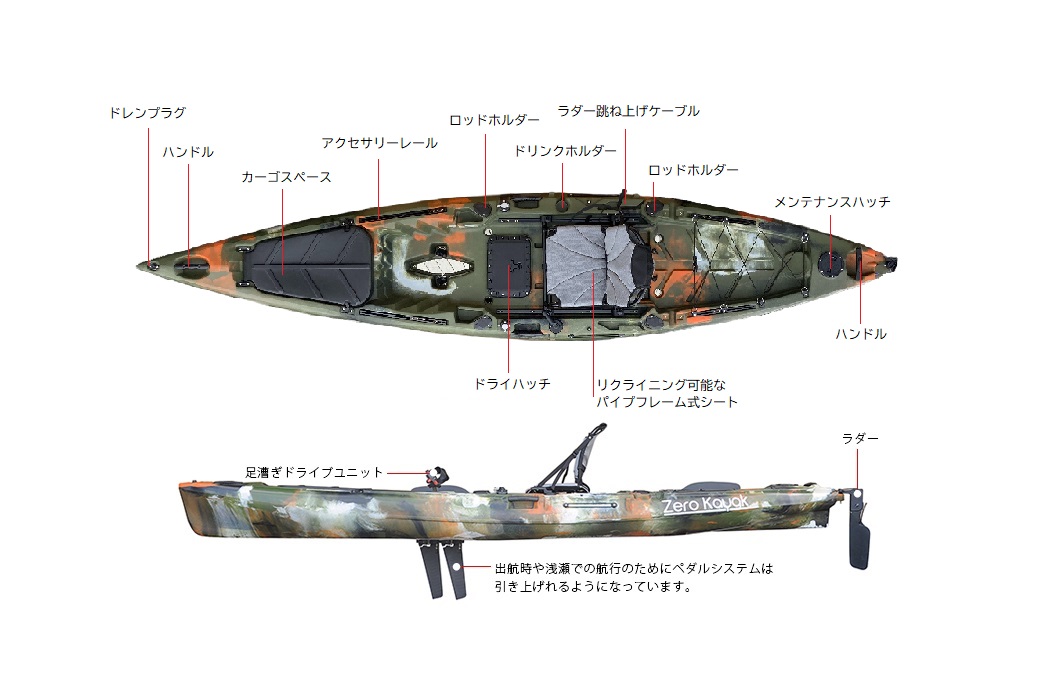
Factory outfitting staff may fit thousands or tens of thousands of polyethylene kayaks, but design already determines which parts go where and how. Specifications gradually settle—rod holder counts, handle positions—and the product reaches market, yet it may not satisfy every customer.
“Two rod holders aren't nearly enough!”
“A handle here would make roof loading easier.”
“Where am I supposed to put the fish finder?”
Then you can ask a dealer's staff to customize it or attempt DIY user outfitting.
Dealer outfitting costs money and sometimes time while the boat is kept, but staff interpret your needs and finish neatly without you buying tools, with lower failure risk. Generally, dealers should handle outfitting.
Horizon Walker outfitting and repair services here
DIY needs tools such as an impact driver or drill. Even if borrowed, unfamiliar users risk mistakes, and some modifications void warranties. This article is for those who still want to do it themselves or are simply curious,so any practical application is at your own responsibility.
Fastening Method ①: Self-Tapping Screws
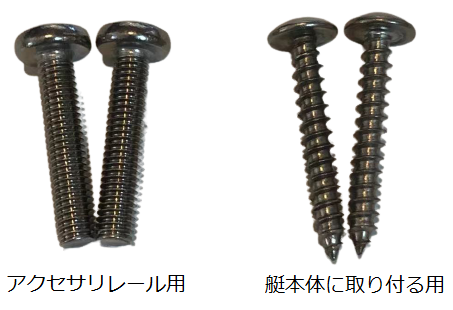
The pointed screw on the right is a Type A (Type 1) self-tapping screw.
Self-tapping screws are fundamental to outfitting; factory fittings often use them too. Parts usually include screws. Otherwise buy them at a hardware store or online, but use stainless steel to avoid rapid seawater rust.
Woodworkers drill pilot holes to prevent splitting, so experienced DIY users can fall into this trap: with self-tapping screws in polyethylene kayaks,
do not drill pilot holes.
Pilot holes reduce thread engagement and strength, risking detachment. As the video shows, choose the position and drive directly.
The screw embeds in plastic, preventing ingress there without sealant. Overtightening strips the base material, so be careful with power tools. With an impact driver, only a brief burst of impacts as shown is enough; if concerned, finish by hand screwdriver.
Drawbacks include:
• The sharp tip projects inside, creating injury risk in sit-in kayaks where legs are enclosed.
• Driving into FRP or rigid ABS may cause cracking.
These are examples.
After removing unwanted fittings, open screw holes compromise sealing, so
• Reinsert the original screw to close the hole
• Seal with a hot glue gun
• Ask a dealer to repair it
or take similar action.
Fastening Method ③: Rivets
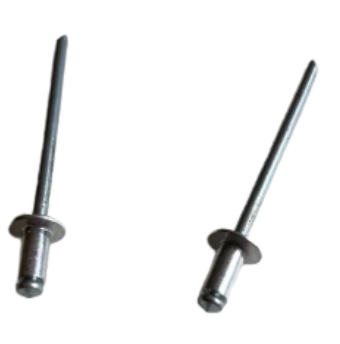
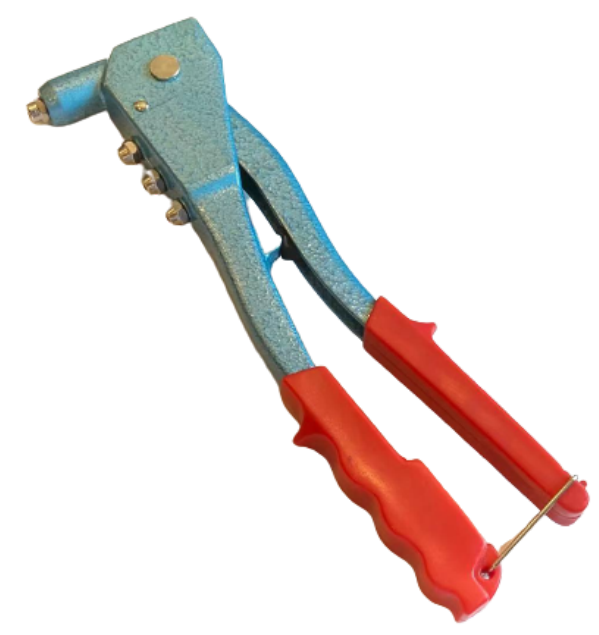
↑ Round-head rivet / Riveter ↓
Rivets suit areas too thin for self-tapping screws and rigid ABS or FRP boats.
They require a drill for pilot holes and a riveter, and removal means drilling or destroying them, making them more demanding than screws.
There is no advantage to choosing rivets where self-tapping screws suffice.
Different metals in rivets and fittings can cause corrosion, so check materials carefully.
Fastening Method ④: Bolts & Nuts
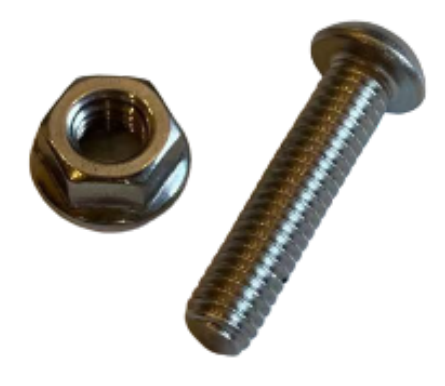
Use bolts and nuts in areas too thin for self-tapping screws, rigid ABS/FRP boats, or where particular strength is needed.
Tightening requires one hand on the bolt and another with a wrench on the nut, so you cannot fit them where the hull interior is inaccessible (access through a hatch is fine).
For inaccessible areas, consider blind nuts or hollow-wall fasteners such as well nuts, turn nuts and impl nuts.
Fastening Method ⑤: Double-Sided Tape & Hook-and-Loop
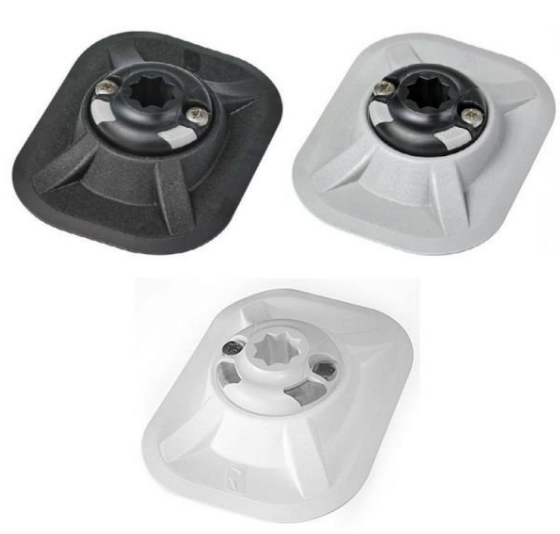
RailBlaza RIBPort
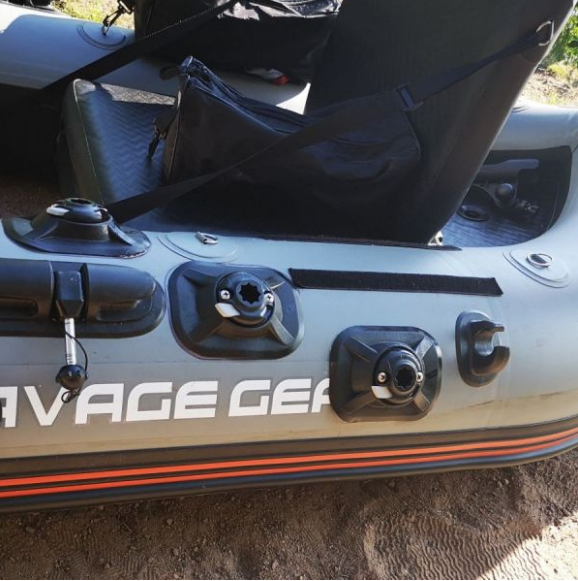
Screws, rivets and bolts all require hull holes, so cannot be used on inflatable kayaks, SUPs or rubber boats.
For inflatable or rubber boats, RailBlaza RIBPort works well. Peel its backing to expose adhesive and stick it in place.
Hook-and-loop fabric is another option. Unlike the three earlier methods, these need no special tools or hull modification, making them approachable, lower-risk user outfitting.
Other Fastening Methods
Magnets, rope, cord and tie-down straps offer many more possibilities with ingenuity.
Consider the fitting, mounting surface, available tools and courage (most important) to find the best method. Horizon Walker accepts outfitting, modifications and repairs for other brands too. We can suggest the methods here and many others; feel free to consult us.